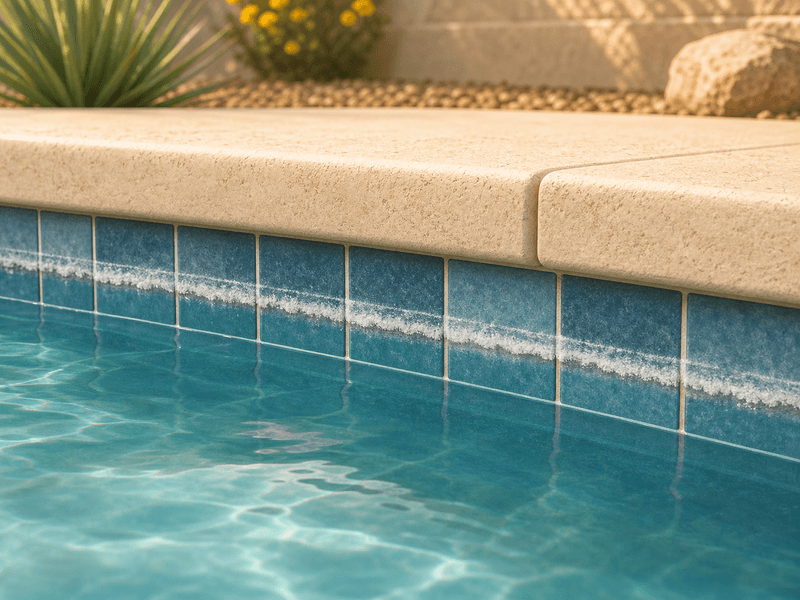
Waterline scale
Photograph the white ring, rough buildup, tile material, raised spa, spillways, and water-feature areas.
Local guide
Not every waterline mark is the same. Some are calcium deposits, some are grime or oils, and some may involve tile, grout, coping, or chemistry issues.
Use these simple prompts to organize scale, stain, tile condition, timing, and scope questions before comparing pool tile cleaning options.
Photograph the white ring, rough buildup, tile material, raised spa, spillways, and water-feature areas.
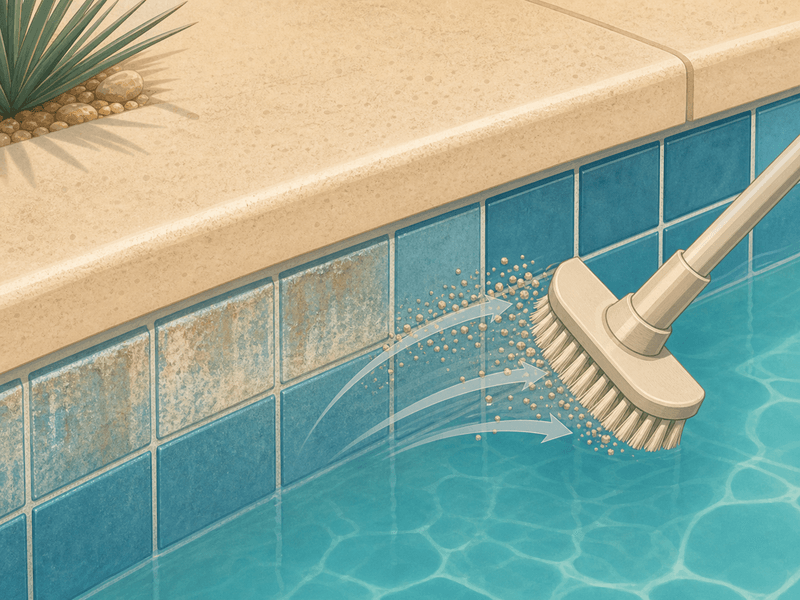
Ask what cleaning method is appropriate for your specific tile, grout, coping, and interior pool finish.
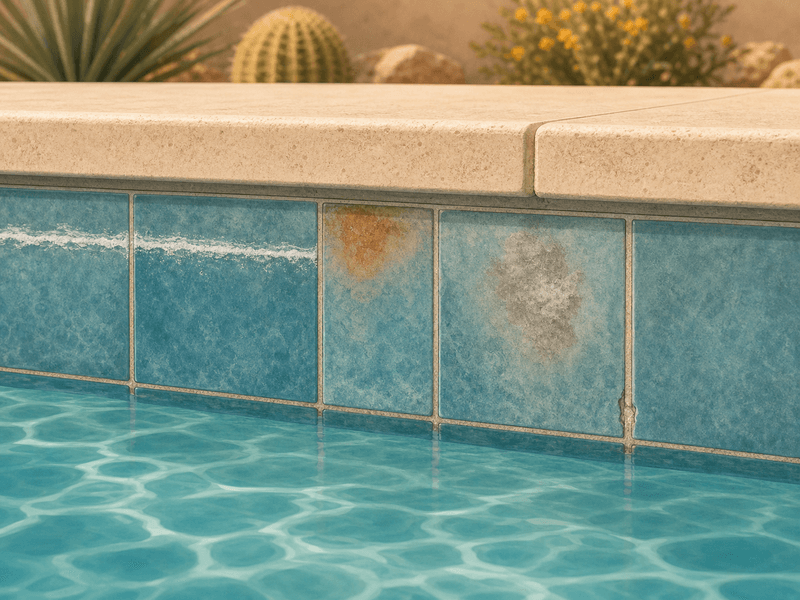
Separate white scale, rust-colored marks, gray film, organic staining, and damaged grout or tile.
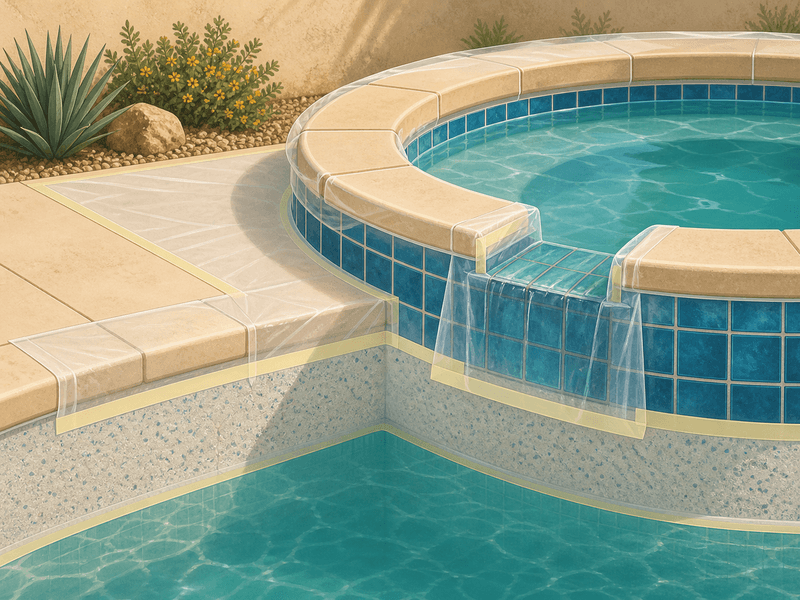
Clarify how nearby plaster, pebble, quartz, fiberglass, glass, grout, stone, and coping are protected.
Cleaning methods that work for one deposit may be wrong for another material or interior pool finish. Ask providers how they identify scale versus staining and what risks exist for glass tile, grout, stone, coping, plaster, pebble, quartz, fiberglass, and sealers.
If waterline staining appears alongside interior pool-surface discoloration, water loss, shifting coping, cracks, or repeated wet spots, separate cosmetic cleaning from possible surface repair or leak concerns.
Request routing
Vegas Pool Surface Guide can collect project details and your request may be shared with a local provider who can contact you about service.